
What Is a Keweenaw County Court Docket
A docket is the chronological event log for a single case. Michigan courts also call it the register of actions. Each time something is filed, scheduled, decided, or paid, the clerk adds a dated line. Read from top to bottom, those lines tell the full story of a case: when it started, what the parties asked for, which hearings were held, and how a judge ruled.
The docket is an index, not the paperwork itself. A line might read "motion filed" or "order entered," but the actual motion or order is a separate document in the case file. Michigan's records-management guidance is clear that the public web view is limited to the case number, party names, and the case history, which is the register of actions. Full documents and images usually stay with the clerk.
Every case type in the county keeps a docket. That includes civil suits, felony and misdemeanor charges, traffic infractions, divorce and custody files, small claims, evictions, and probate petitions.
How to Look Up a Keweenaw County Docket
Most current Keweenaw County dockets are searchable through MiCOURT Case Search, the statewide public case portal run by the Michigan judiciary. The tool is free and works from any browser. Public results are restricted to the case number, party names, and the register of actions, so treat what you find as a case index rather than the complete file.
- Open the MiCOURT Case Search portal at micourt.courts.michigan.gov/case-search.
- Choose the court or court location, then select the Keweenaw County court that fits the case type.
- Enter a case number for an exact match, or search by party last name and first name.
- Complete the hCaptcha challenge if the portal presents one, then run the search.
- Open the case summary and scroll the case history to read each docket entry in date order.
Pick the right court before you search. Felonies, civil cases over $25,000, divorce, custody, and personal protection orders sit with the 12th Circuit Court. Misdemeanors, traffic and civil infractions, small claims, and landlord-tenant matters sit with the 97th District Court. Estates, guardianships, conservatorships, and juvenile matters run through the Probate Court.
The Michigan Courts also publish a separate cases, opinions, and orders search for appellate decisions, which is distinct from trial-court docket lookup and does not replace inspecting a local file.
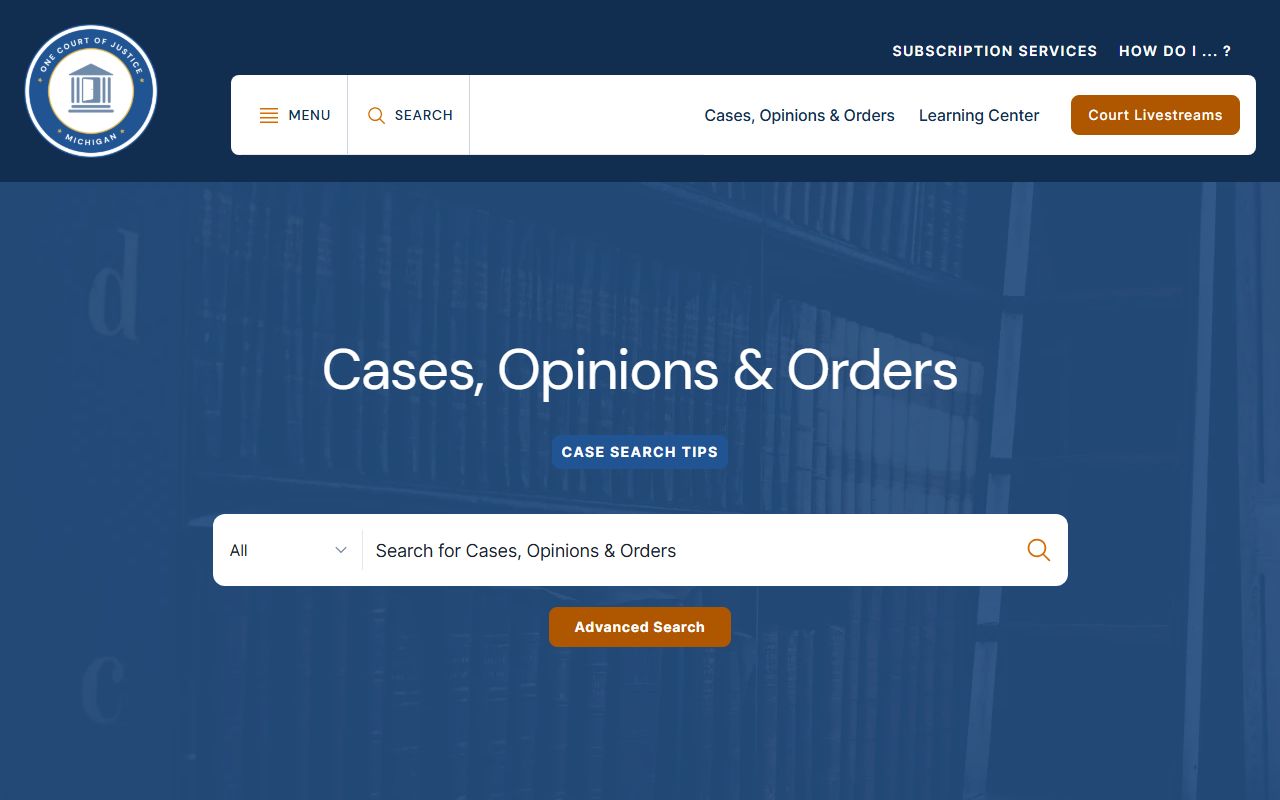
The Michigan Courts appellate cases, opinions, and orders search covers published rulings and orders. Use it for higher-court decisions, then return to MiCOURT or a Keweenaw County clerk for the trial-court docket that tracks a specific local case.
Sample Keweenaw County Register of Actions
A register of actions reads like a timeline. Each row marks one event, dated in the order it happened. The exact wording varies by case type, but the arc is familiar: a case opens with a filing, moves through hearings and motions, reaches a judgment or sentence, and closes once obligations are satisfied. The table below shows the common docket entries described in Michigan case-level records.
| Docket Entry | What It Marks |
|---|---|
| Complaint filed | The first pleading that opens a civil or criminal case. |
| Summons issued | Court notice directing a party to respond or appear. |
| Service filed | Proof that the summons and papers reached the other party. |
| Arraignment | First criminal appearance where charges and rights are read. |
| Bond set | Money or conditions ordered to secure a defendant's appearance. |
| Hearing scheduled | A date, time, and judge assigned for the next proceeding. |
| Motion filed | A written request asking the court for a specific order. |
| Order entered | The judge's written decision on a request or issue. |
| Judgment entered | Final decision in a civil or domestic case. |
| Sentencing | Punishment imposed after a criminal conviction. |
| Payment | A fine, cost, or restitution amount posted to the case. |
| Satisfaction | Record that a judgment or balance has been paid in full. |
| Appeal | Notice that a party is seeking review by a higher court. |
Not every case shows every line. A traffic infraction may close in a handful of entries, while a felony can run for pages. The register still follows the same logic, so once the pattern is clear, any Keweenaw County docket becomes easier to read.
Court dockets and the registers behind them are governed by Michigan Court Rule 8.119, which sets how courts keep case records, maintain the register of actions, provide public access, and seal files when the law requires it. You can read the rule in the Michigan Court Rules, Chapter 8.
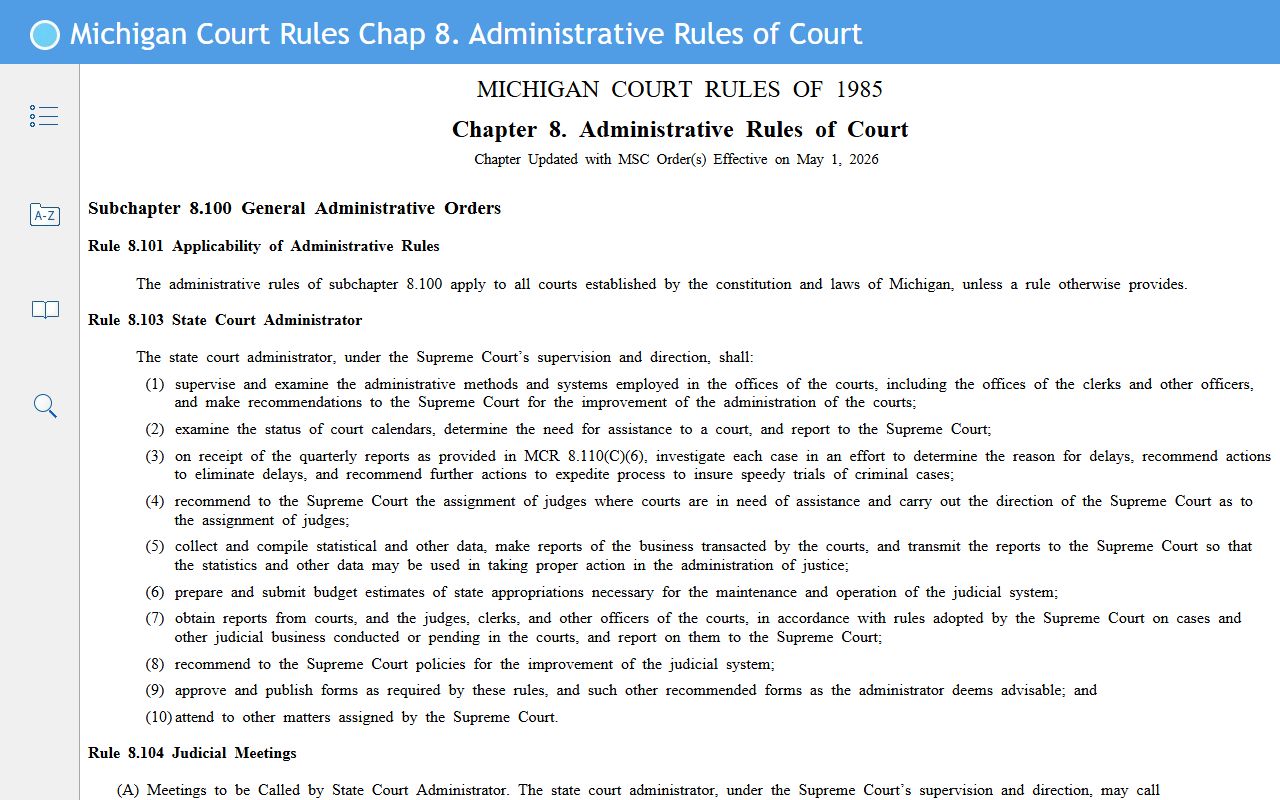
The Michigan Court Rules, Chapter 8 spell out the recordkeeping duties behind every docket. Rule 8.119 is why Keweenaw County registers of actions look consistent across the circuit, district, and probate levels.
Keweenaw County Courts That Keep Dockets
Three local courts share the Keweenaw County Courthouse at 5095 Fourth Street in Eagle River, and each keeps its own dockets. The circuit and district courts answer at 906-337-2229. The Probate Court answers at 906-337-1927. Because so many offices share one building, always ask for the exact court that owns the case type rather than the courthouse in general.
- 12th Circuit Court: felony criminal cases, civil suits over $25,000, divorce, paternity, custody, parenting time, personal protection orders, and appeals from the District Court.
- 97th District Court: misdemeanors, felony first appearances and preliminary examinations, bail, traffic and civil infractions, small claims to $6,000, and landlord-tenant matters.
- Probate Court: estates, trusts, guardianships, conservatorships, mental-health commitments, and the juvenile and family matters handled locally by the part-time probate judge.
The Keweenaw Magistrate Office supports the District Court by processing traffic-citation payments and running informal hearings, and those actions show up on the related district docket. Whether a docket appears in MiCOURT depends on the court and the case type, so the phone lines above remain the reliable backup for anything the portal does not display.
For a wider view of how these dockets connect to the underlying files, see the county court records overview.
Docket Versus the Full Case File
A docket and a case file are not the same thing. The docket is the short list of dated events. The case file holds the actual documents behind those events: the complaint, the motions, the exhibits, the orders, and the judgment. Reading the docket tells you what happened and when. Reading the file tells you exactly what each document says.
| Docket | Full Case File | |
|---|---|---|
| Content | Dated list of events | Complete documents and images |
| Public web access | Case number, party names, case history | Usually not online |
| Where to get it | MiCOURT Case Search | Court clerk, counter or mail |
| Best use | Track case progress | Review evidence and rulings |
The public web portal is deliberately narrow. Michigan's records-management guidance limits online public case records to the case number, party names, and the register of actions. Certified copies, document images, older files that were never digitized, and sealed or nonpublic material stay with the clerk. For a felony that began in district court and moved up on bindover, the docket may point to both courts, and the underlying criminal court records live where the file is held.
Court files also travel a different legal road than police records. The Michigan Attorney General FOIA page explains that the judiciary is excluded from the Freedom of Information Act's public-body definition, so a case docket is requested from the court, not through a FOIA form.
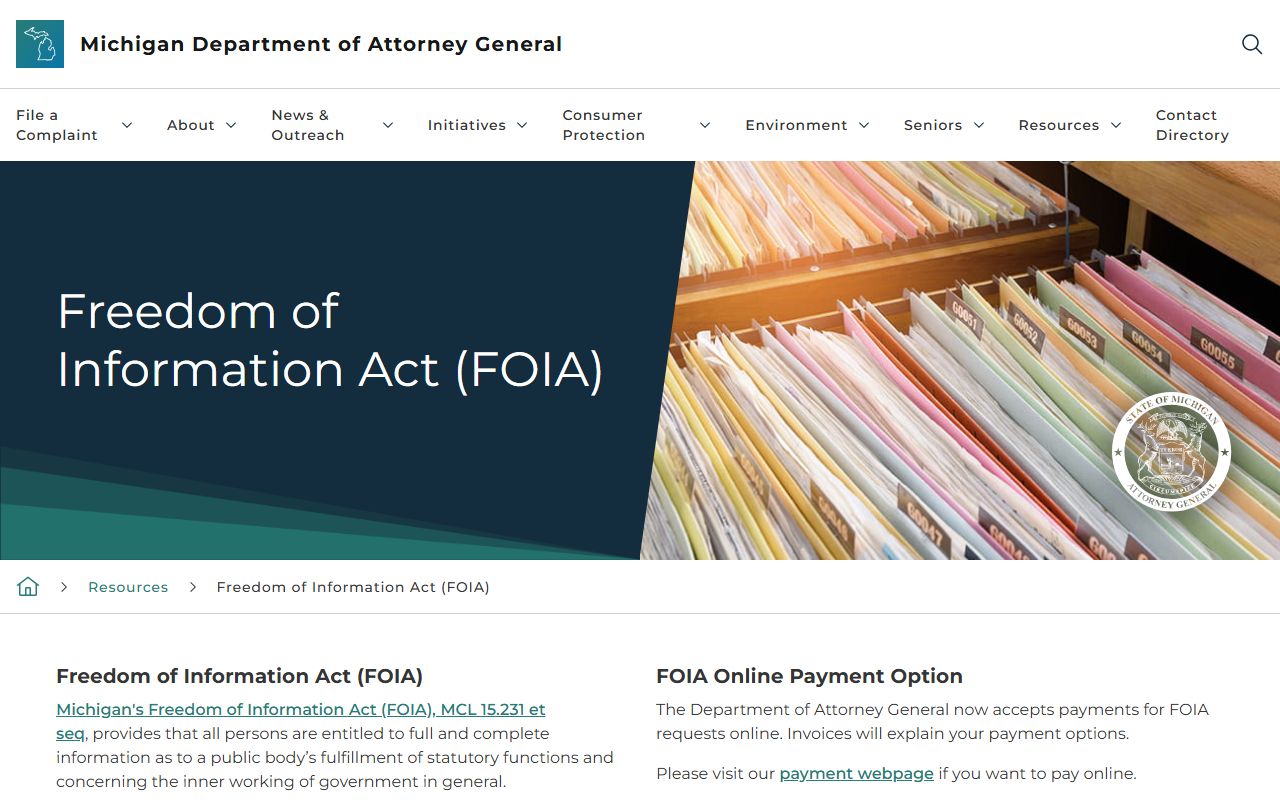
The Michigan Attorney General FOIA guidance draws the line between executive-branch records and court records. For a Keweenaw County docket or case file, contact the clerk directly, and save FOIA for sheriff and other agency records.
Federal Dockets Tied to Keweenaw County
Some matters involving Keweenaw County residents are federal, not county, cases. Bankruptcy is the most common. Those dockets belong to the United States Bankruptcy Court for the Western District of Michigan, which hears Keweenaw filings through its Marquette hearing location rather than the Eagle River courthouse.
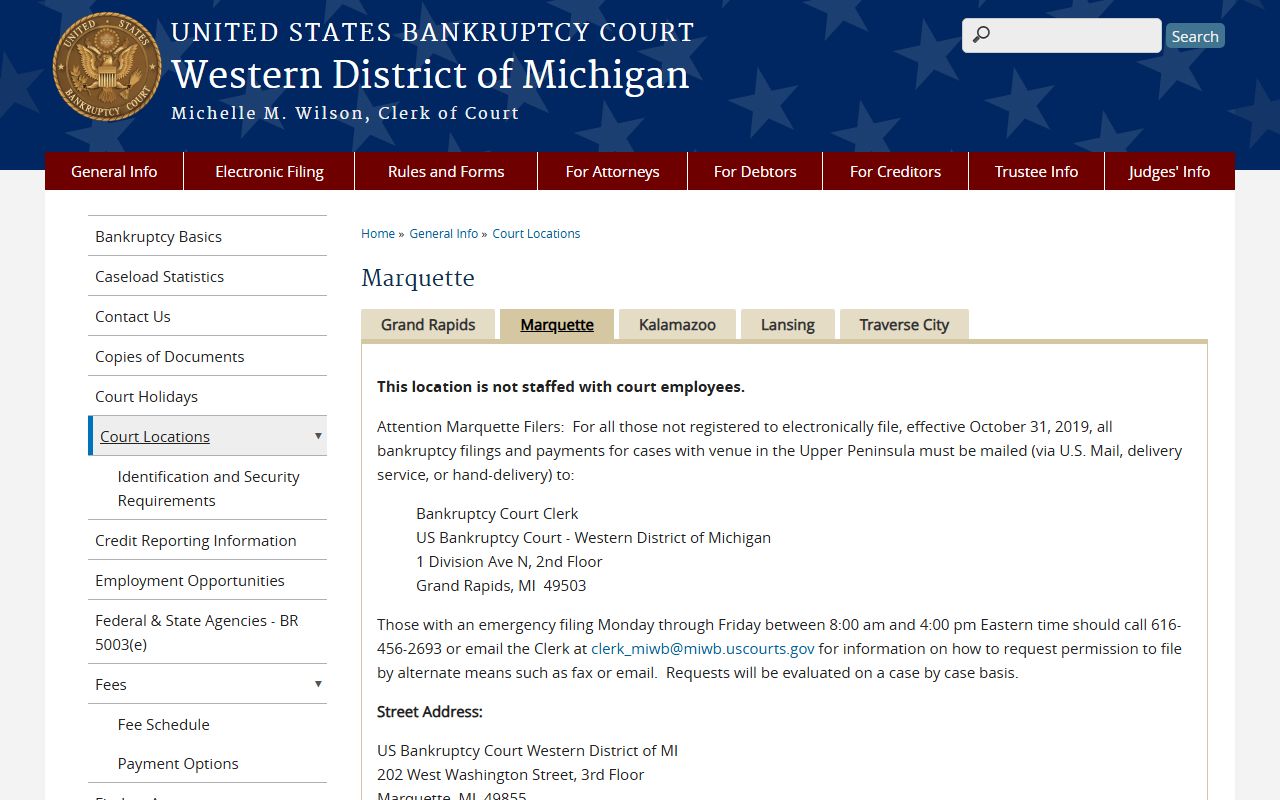
The bankruptcy court Marquette page lists the office and creditor meeting details for the region. A federal docket works much like a state register of actions, listing each filing and order in date order.
Federal dockets and documents are delivered through PACER, the public case-access system, and CM/ECF, the electronic filing system. Both require a PACER account, and viewing pages carries a per-page fee set by the federal courts.
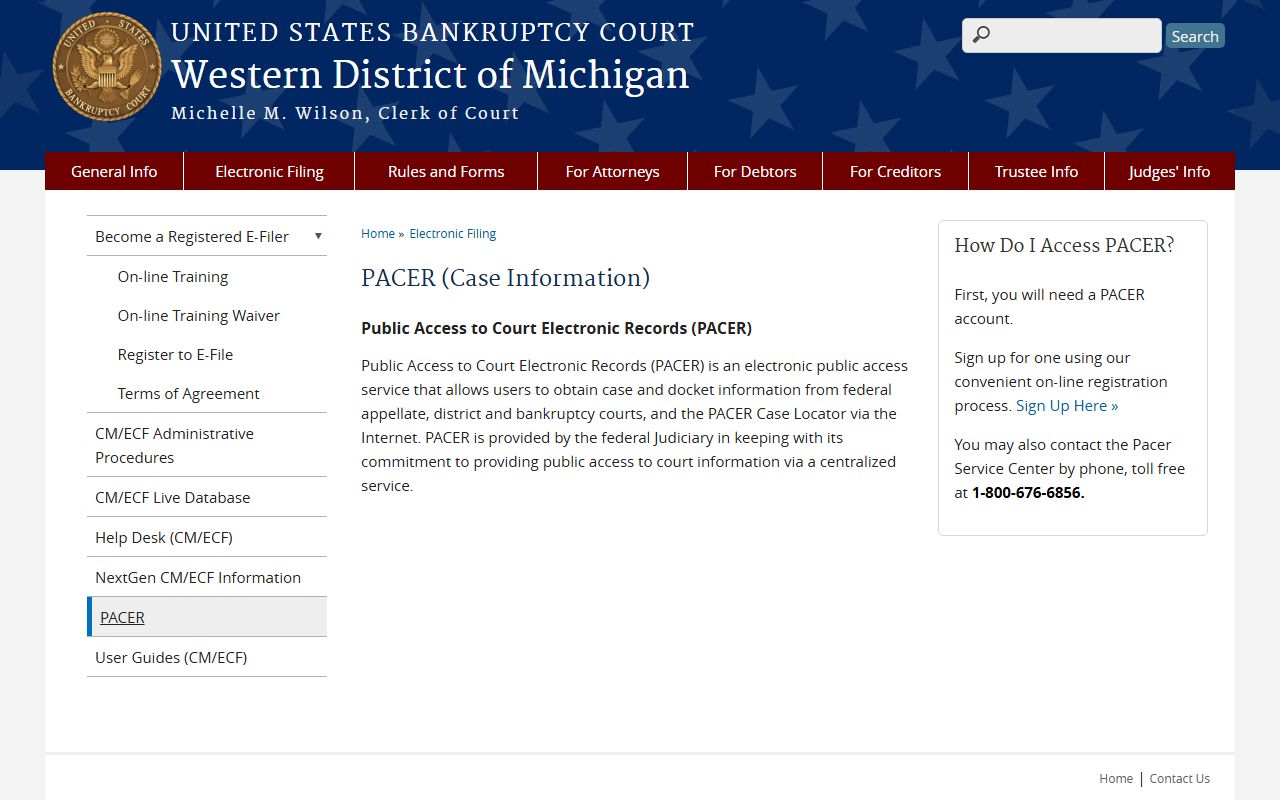
The bankruptcy CM/ECF case information page explains how to reach case and docket data. It walks through the account and search steps a Keweenaw County filer or creditor needs before pulling a federal record.
The Western District bankruptcy CM/ECF system is the login gateway for electronic dockets and filings. Keep it separate from the county courthouse: a Keweenaw County bankruptcy sits in the federal system, while state criminal, civil, and probate dockets stay local.
Older Keweenaw County Dockets
Dockets from the county's early decades are not in MiCOURT. Keweenaw County was organized in 1861 with Eagle River as its seat, and its oldest court records now live at the Archives of Michigan. Those holdings matter for genealogy, property history, and any research reaching into the copper-mining era.
The Archives of Michigan Keweenaw County guide lists specific record groups and year ranges. The Circuit Court docket runs 1867 to 1906, with Circuit Court case files from 1861 to 1952 and the Circuit Court journal from 1880 to 1937. The guide also documents the coroner's docket from 1911 to 1948, the chancery calendar from 1862 to 1923, and a jail record from 1874 to 1959.
For anything older than the digital era, the path is the Archives for historical dockets and the local court clerk for files that were kept but never scanned. Both channels fill the gap that the online portal cannot cover.
Where to Get Keweenaw County Docket Details
Three channels cover almost every Keweenaw County docket request. Start online, then move to the clerk, then to the Archives for the oldest material. The right choice depends on how current the case is and how much of the file you need.
- Online: MiCOURT Case Search shows current dockets, limited to case number, party names, and the register of actions.
- Phone or counter: call the 12th Circuit or 97th District Court at 906-337-2229, or the Probate Court at 906-337-1927, for files not online, certified copies, and fee questions.
- Historical: contact the Archives of Michigan for dockets and case files from the county's early court records.
A note on timing helps in this county. The Keweenaw County Courthouse keeps limited hours, and the county advises callers to confirm the building is open during storms before traveling a long distance. A quick call to the correct court line saves a trip and confirms whether a docket is available online or only at the counter.