
Criminal Court Records in Keweenaw County
The criminal court record is the case file a court clerk opens once a prosecutor authorizes charges. It is the case-level record of a prosecution, not a police report. From the first filing forward, the clerk logs each event: the complaint and warrant, the defendant's first appearance, bond decisions, motions, plea or trial, the verdict, and the sentence. Every entry lands in a running list called the register of actions. That register, plus the documents behind it, is what most people mean when they ask for a Keweenaw County criminal court record.
Two local courts share the criminal caseload. The 97th District Court handles misdemeanors punishable by up to one year in jail, and it manages the early stages of every felony, including the first appearance, bail, and the preliminary examination. The 12th Circuit Court is the felony trial court. After a felony is bound over from the district level, the circuit court takes the information, holds the circuit arraignment, and carries the case through plea or trial and sentencing. Because both courts sit at the same Eagle River courthouse and answer the same phone line, the fastest lookups start by naming the exact court and case type rather than the building.
How to Search Keweenaw County Criminal Court Records
The main online tool is MiCOURT Case Search, the Michigan judiciary's statewide public case portal. It can return criminal, civil, traffic, domestic, and probate case information depending on the court searched. Public web results are limited, though. The Michigan Courts records-management guidance restricts what the portal shows to case number, party names, and the case history or register of actions. Full documents and older files usually come from the clerk.
- Open MiCOURT Case Search and choose the Keweenaw County court that fits the case, either the 97th District Court or the 12th Circuit Court.
- Search by defendant name for a person, or enter the exact case number from a citation, notice, or clerk letter for the quickest match.
- Narrow the results by court, case type, and filing date to separate a criminal file from traffic or civil matters.
- Open the case to read the register of actions, then follow the docket down to the plea and disposition entries.
- Call or visit the clerk at 906-337-2229 for certified copies, plain copies, sealed-file questions, or any record that is not online.
For a name-based file search at the counter, the 12th Circuit Court charges $10.00 per name. Payment can be made in person by cash, check, money order, or card, and the circuit court accepts online payments as well. The Sheriff's FOIA process is a different channel and only reaches law-enforcement records, not the court's case files, because Michigan treats the judiciary separately from executive-branch public bodies.
Stages of a Keweenaw County Criminal Case
A criminal case leaves a footprint at every step, and the record grows as the case moves between courts. Felonies begin in the district court and finish in the circuit court, so a single serious case can hold two linked files. Reading the stages in order makes the docket easy to follow.
Case flow: Charges Filed › Arraignment › Preliminary Exam / Bindover › Circuit Arraignment › Plea or Trial › Disposition › Sentencing
- Charges Filed
- The prosecutor authorizes a complaint and, if needed, a warrant. This first pleading names the defendant and the offense and starts the court file.
- Arraignment
- The defendant appears in the 97th District Court, hears the charges and their rights, and the court sets bond or release conditions.
- Preliminary Exam and Bindover
- For a felony, the district court holds a preliminary examination to decide if enough evidence exists. If it does, the case is bound over to the 12th Circuit Court.
- Circuit Arraignment
- The circuit court receives the information, arraigns the defendant on the felony, and the file continues at the trial-court level.
- Plea or Trial
- The defendant pleads guilty or no contest, or the case goes to trial. Motions, hearings, and pretrial entries fill this stretch of the docket.
- Disposition and Sentencing
- Disposition records the outcome of each charge. If there is a conviction, the sentence follows, along with any probation, restitution, or financial obligations.
What a Keweenaw County Criminal Court Record Shows
Open a criminal file and you find a mix of identifying data, event history, and outcome. The case number ties everything together, while the register of actions logs the timeline. A single felony file can list dozens of entries, from the first complaint to the final judgment of sentence. The table below breaks down the fields most readers look for.
| Field | What It Shows |
|---|---|
| Case Number | The unique number the court assigns when the case is filed. Use it for the fastest and most exact search. |
| Court and Location | Whether the file sits with the 97th District Court or the 12th Circuit Court, both in Eagle River. |
| Defendant and Parties | The charged person on one side and the People of the State of Michigan, through the prosecutor, on the other. |
| Charges | Each offense as filed, with the statute cited and the level, whether misdemeanor or felony. |
| Register of Actions | The chronological docket: complaint filed, bond set, hearings scheduled, motions, orders, and judgments. |
| Plea | The defendant's answer to each charge, such as guilty, not guilty, or no contest. |
| Disposition | The result of each charge, including dismissed, acquitted, or convicted. |
| Sentence | Any jail or prison term, probation, fines, costs, and restitution ordered after a conviction. |
Sensitive items stay out of public view. Social Security numbers, financial account numbers, home addresses of protected people, details about minors, and medical or mental-health information are redacted or held back under court rule. A related look at how offenses first enter the system appears on the arrest and charge records page.
Charges vs Convictions in the Record
Being charged is not the same as being convicted. A criminal court file can hold charges that were later dropped, dismissed, or that ended in an acquittal at trial. A charge is only an accusation, tested against the low bar of probable cause. A conviction requires proof beyond a reasonable doubt or an accepted guilty or no-contest plea. Reading the disposition line for each count is the only way to tell which is which.
| Charge | Conviction | |
|---|---|---|
| Stage | Accusation at filing | Verdict or accepted plea |
| Burden of Proof | Probable cause | Beyond a reasonable doubt |
| Meaning | Not a finding of guilt | Legal finding of guilt |
| Public Record | Yes, unless made nonpublic | Yes, unless set aside |
This gap matters for anyone reading a file quickly. A person can appear in the record with several charges and still be convicted of only one, or none. Employers, landlords, and neighbors who stop at the charge line draw the wrong conclusion, which is why the disposition and sentence entries carry the real answer.
The Prosecutor and Defense in Keweenaw County Criminal Cases
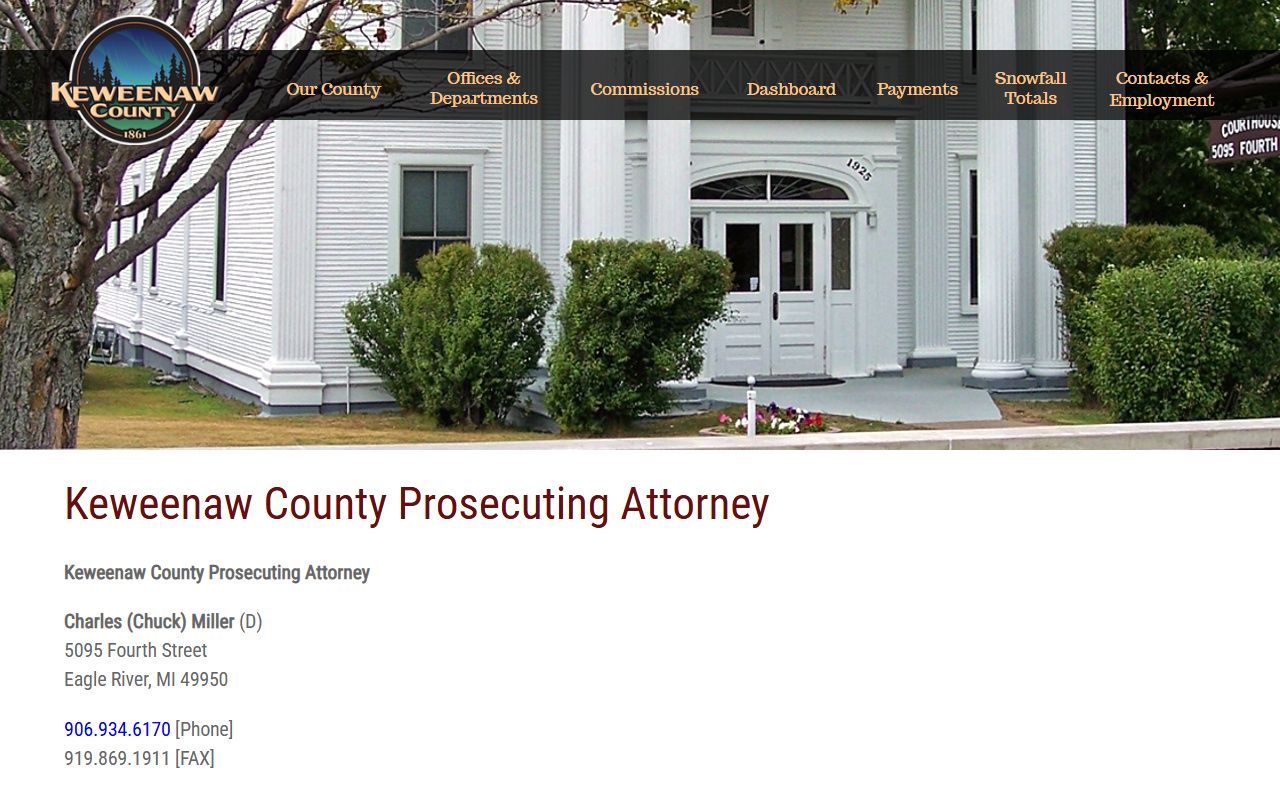
Charges enter the court through the Keweenaw County Prosecuting Attorney. Charles Miller leads that office, which works with law enforcement to see that people who commit crimes in the county are fully and fairly prosecuted. The prosecutor authorizes complaints and warrants, decides what to file, and carries the case through plea or trial. The office also enforces personal protection orders, participates in mental-health commitment hearings, prosecutes child protective proceedings, and gives crime victims assistance and input at key points.
A visit to the Keweenaw County Prosecuting Attorney page lays out those duties and the office contact details. That page helps explain why a criminal court record names the People of the State of Michigan as the charging party rather than a private accuser, since the prosecutor brings the case on the public's behalf.
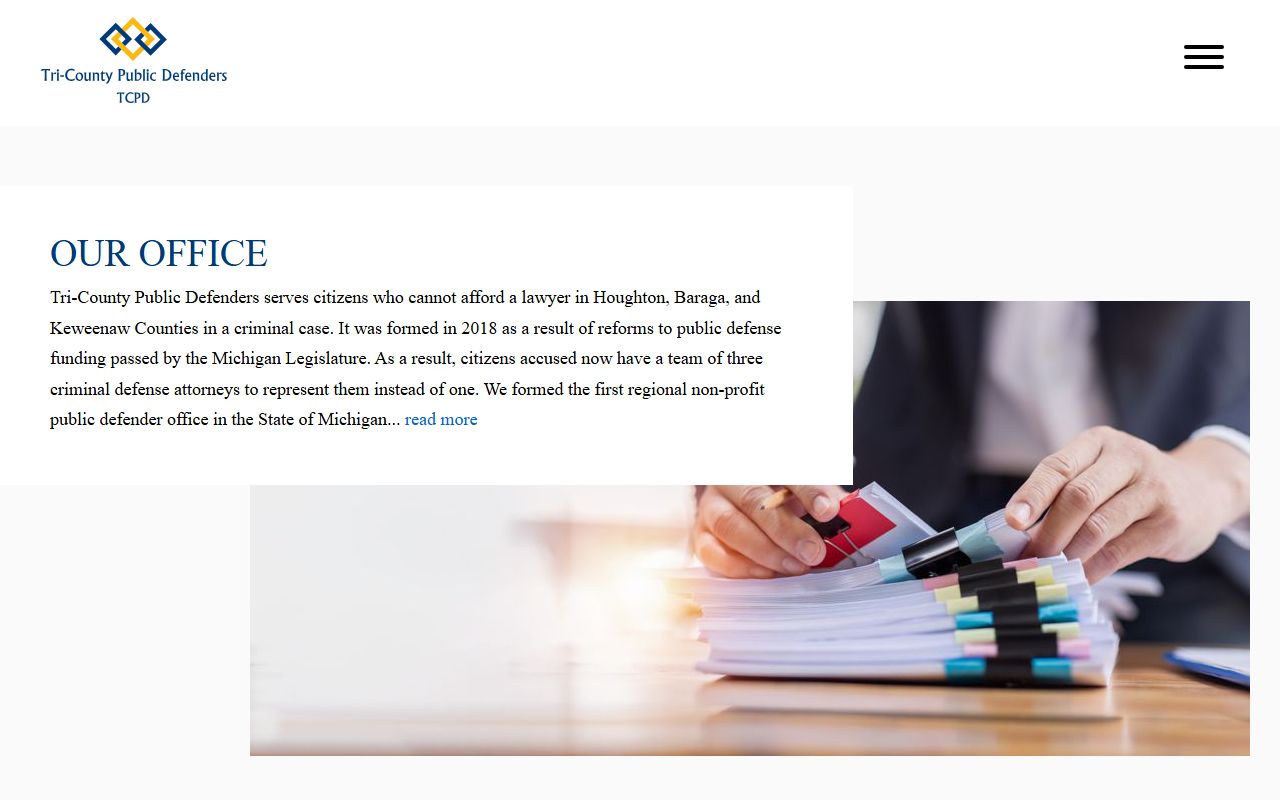
On the other side of the file sits the defense. A defendant who cannot afford a lawyer in a criminal case may be assigned counsel through the courts. Tri-County Public Defenders serves Houghton, Baraga, and Keweenaw Counties and was formed in 2018 as part of Michigan's public-defense funding reforms. The office represents citizens who qualify for appointed counsel, and its work appears in the record as appearances, motions, and hearing participation on the defendant's behalf.
The Tri-County Public Defenders office site describes that regional coverage and its role in criminal cases. Actual appointment for any single case follows the court's own process and orders, so a defendant seeking counsel should ask the court handling the charge rather than treat it as a records request.
Both sides shape what the record eventually shows. Plea negotiations, dismissed counts, and sentencing agreements all trace back to the give and take between the prosecutor and defense counsel.
Reading Dispositions and Sentences
The disposition is the bottom line for each charge. Common entries include guilty, not guilty, dismissed, and nolo contendere, which is Latin for no contest and functions like a guilty plea for the case at hand. Some cases show a deferred or delayed outcome, where a plea is held open while the defendant meets conditions, and the charge may be dismissed later. Each count carries its own disposition, so a file with three charges can show three different results.
The sentence follows any conviction. In the record it can list a jail or prison term, probation, fines, court costs, and restitution to victims. Probation entries often add supervision conditions and review dates. Because the 12th Circuit Court sentences felonies and the 97th District Court sentences misdemeanors, the sentencing document lives in whichever court entered the conviction. Reading the judgment of sentence, rather than an earlier docket note, gives the accurate final terms.
Public Access to Keweenaw County Criminal Court Records
Most criminal case files are open to the public. Access rests on court rule rather than the general Freedom of Information Act, because Michigan's FOIA excludes the judiciary from its definition of a public body. That is why a court case file comes from the clerk, while a Sheriff's incident report comes through the Sheriff's FOIA form. For court records, the governing framework is the Michigan Court Rules, and the clerk is the right first call at 906-337-2229.
Key Authorities:
MCR 8.119 - governs court records, the register of actions, public access, and how a court seals records.
MCL 15.232 - defines a public body under Michigan FOIA and excludes the judiciary, including the county clerk acting as circuit-court clerk.
MCL 15.235 - gives executive-branch public bodies five business days to answer a FOIA request, with one possible ten-day extension.
Michigan FOIA still frames how the public reaches law-enforcement records that sit outside the court file. Its policy statement in MCL 15.231 favors access, and the fee rules in MCL 15.234 let agencies charge for search and copying. For the case file itself, though, the court clerk and MiCOURT remain the correct doors.
Sealed vs Set Aside and Expunged Criminal Records
Not every criminal record stays public forever. Michigan calls expungement setting aside a conviction, and it is a formal court process, not an automatic erasure. A sealed or nonpublic record is hidden from routine public search but may still exist for limited official use. A set-aside record is removed from ordinary public criminal-record views to the extent the statute allows. The distinction changes what a later search can find.
The controlling statute is worth a look before filing anything. The Michigan set-aside statute, MCL 780.621, sets out who qualifies and how the process runs. Clean Slate expansions now reach up to three felonies and unlimited misdemeanors, with exclusions such as certain assaultive or weapons offenses and felonies that carry a maximum life sentence.
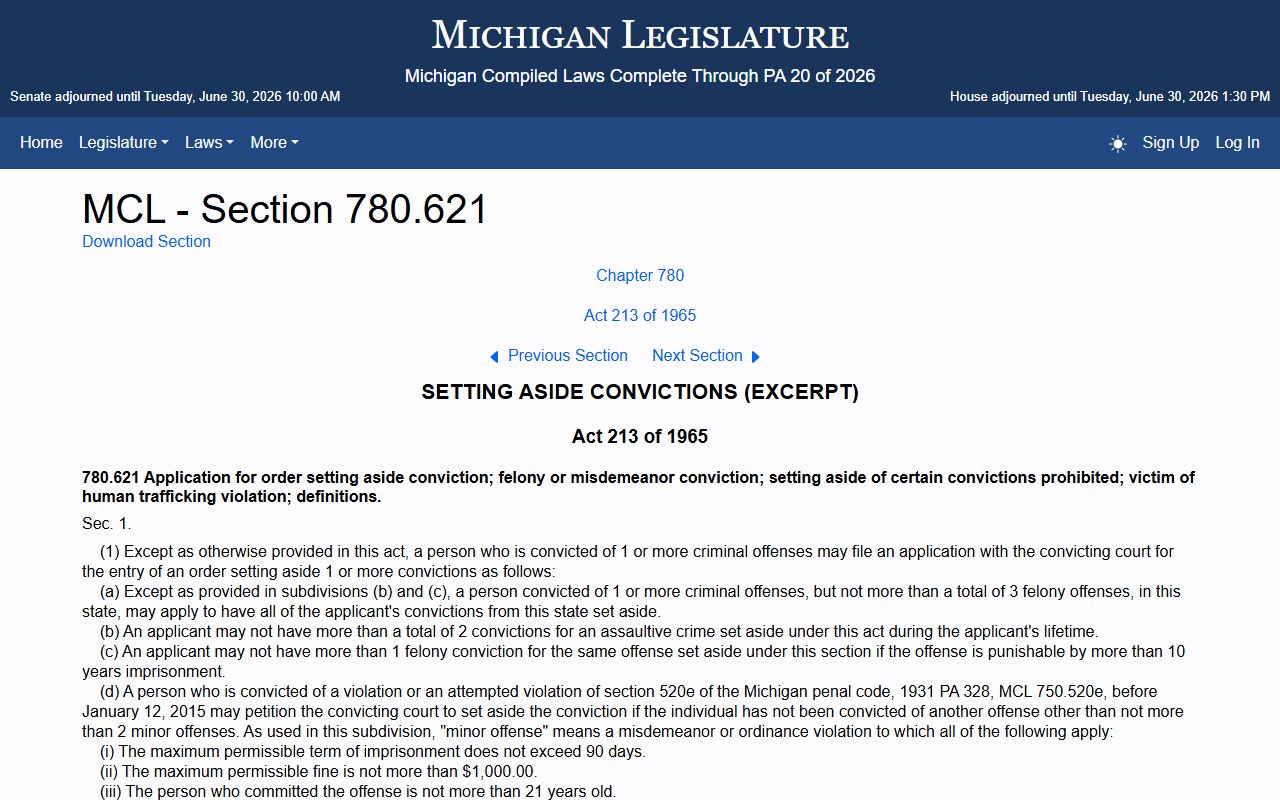
That statute is the anchor for any Keweenaw County expungement effort, and the comparison below shows how a sealed record differs from one that has been set aside.
| Sealed / Nonpublic | Set Aside / Expunged | |
|---|---|---|
| Public Visibility | Hidden from routine public search | Removed from ordinary public criminal views |
| Official Access | Limited access for certain uses | Very limited under the set-aside order |
| How It Happens | Court rule or statute makes it nonpublic | Petition and order under MCL 780.621 |
| Eligibility | Dismissed, acquitted, or nolle prosequi matters may qualify | Up to three felonies, unlimited misdemeanors, with exclusions |
Filing a set-aside starts in the court of conviction. A misdemeanor conviction usually lives in the 97th District Court, while a felony conviction sits with the 12th Circuit Court. The steps below map the general path.
- Pull the exact conviction details: court, case number, offense statute, and the sentence or discharge date.
- Check eligibility against MCL 780.621 and any offense exclusions before you file.
- Obtain the set-aside forms from Michigan Courts or Michigan Legal Help resources.
- File in the court of conviction, either the 97th District Court or the 12th Circuit Court.
- Once granted, the order goes to state repositories, and the case leaves ordinary public views to the extent the law allows.
Restricted Keweenaw County Criminal Court Records
Some criminal-related records never open to a routine public search. Juvenile matters are the clearest example. In Keweenaw County, juvenile cases are handled locally through the part-time probate judge, and access is limited under the juvenile-record confidentiality statute, MCL 712A.28. A juvenile file is not an ordinary public criminal record, and a court-specific access order is often required to view it.
Other files stay closed for different reasons. Records made nonpublic by court rule, sealed warrants, and active investigative material are withheld to protect the case or the people in it. Set-aside convictions drop out of public view once the order enters. Personal identifiers, victim details, and mental-health information are redacted even inside otherwise open files. When a search comes back empty, the record may simply be restricted rather than missing, and the clerk can confirm which rule applies. For the wider set of case types beyond criminal matters, the county court records overview points to each court and clerk.