
Keweenaw County's Part-Time Probate Judge
Michigan places a probate court in every county, and some counties share one through a probate court district. Keweenaw County stands out. The county runs its probate work with a single part-time probate judge who handles every probate and juvenile matter within county lines. That one office decides estate cases, guardianship petitions, and mental-health commitments, and it carries the local juvenile docket too. For a small county spread across the tip of the Keweenaw Peninsula, this streamlined setup keeps all probate authority in one place.
Michigan probate courts once held exclusive power over a wide list of matters. That list included juvenile delinquency, child abuse and neglect, adoptions, estates, wills, name changes, guardianships, conservatorships, and involuntary commitments. In 1998, the Legislature created the Family Division of Circuit Court and shifted several of those matters out of probate court. Delinquency, abuse and neglect, adoptions, name changes, emancipation, and waivers of parental consent moved into the Family Division. Most counties then assigned a probate judge to cover that division. Keweenaw did the same in practice, so the county's one part-time probate judge handles both traditional probate cases and the moved Family Division matters.
The scope of this court is set by statute. Under the Michigan probate code, the probate court has jurisdiction over estate administration, trusts, guardianships, conservatorships, and protective proceedings for people who cannot manage their own affairs. Reviewing Michigan's probate-court jurisdiction statute at MCL 700.1302 shows the legal foundation for what the Keweenaw bench can hear. The record below connects that statutory grant to the everyday filings the court keeps on file.
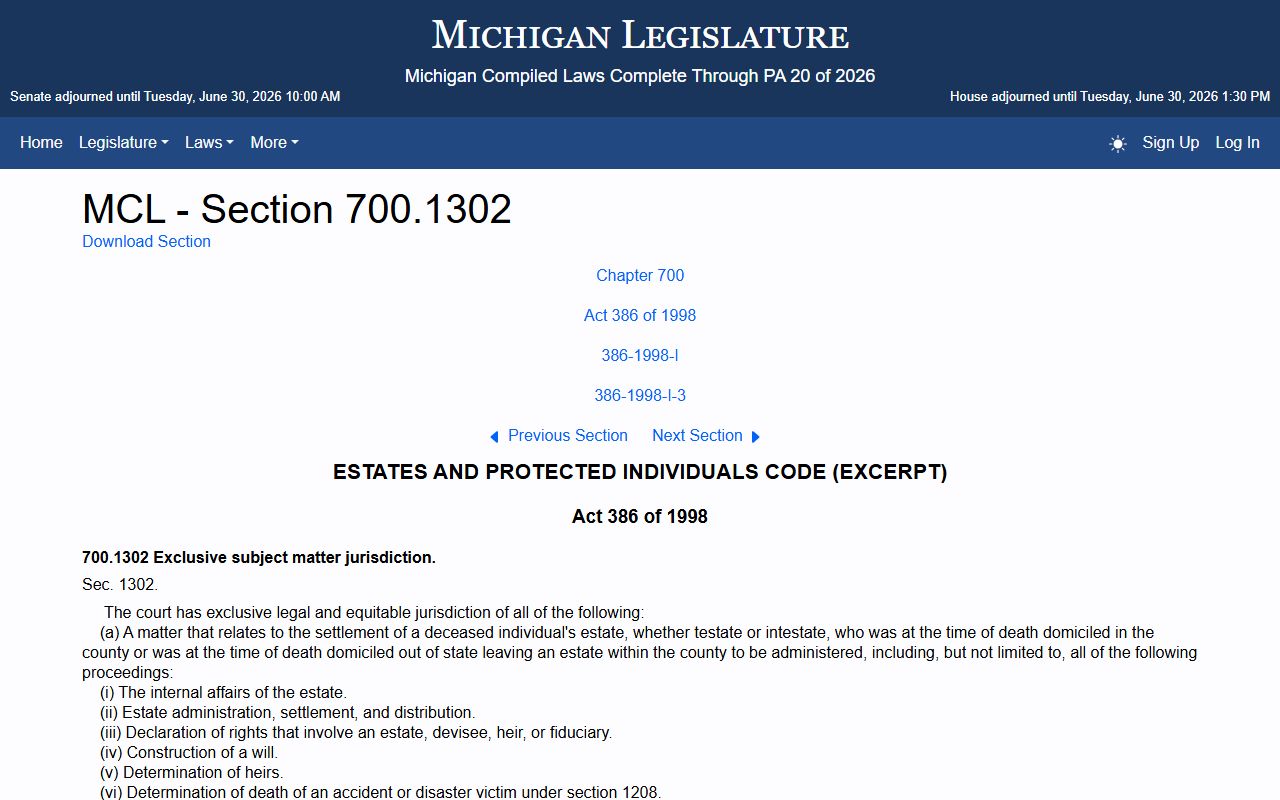
That jurisdiction statute is why a single Keweenaw County office can open an estate one day and appoint a guardian the next. The same judge and probate register touch nearly every case type described on this page.
What Keweenaw County Probate Records Cover
Keweenaw County probate records span several distinct case types. Some deal with property and money after a death. Others protect a living person who needs help managing health, safety, or finances. Because the local court also carries the juvenile and moved Family Division dockets, its files reach further than probate work in some larger counties. The main categories a searcher will encounter include:
- Decedent estates and estate administration
- Admission of wills to probate
- Trust matters and trust administration
- Guardianships for minors and incapacitated adults
- Conservatorships over a protected person's property
- Mental-health commitments and hospital care for people with mental illness
- Juvenile matters handled locally by the part-time probate judge
- Moved Family Division matters such as name changes, adoptions, emancipation, and waivers of parental consent
Public access is not equal across these categories. Decedent estates, wills once admitted, and many guardianship and conservatorship filings are open to the public, subject to redaction of sensitive personal data. Mental-health, juvenile, and adoption matters carry strong confidentiality protections and are not ordinary search records. Michigan also runs statewide problem-solving court programs, such as drug-treatment and family dependency courts, described on the state judiciary's Michigan problem-solving courts page. Keweenaw County does not publish its own specialty-court docket, so those programs sit within the broader state framework rather than as a separate local court.
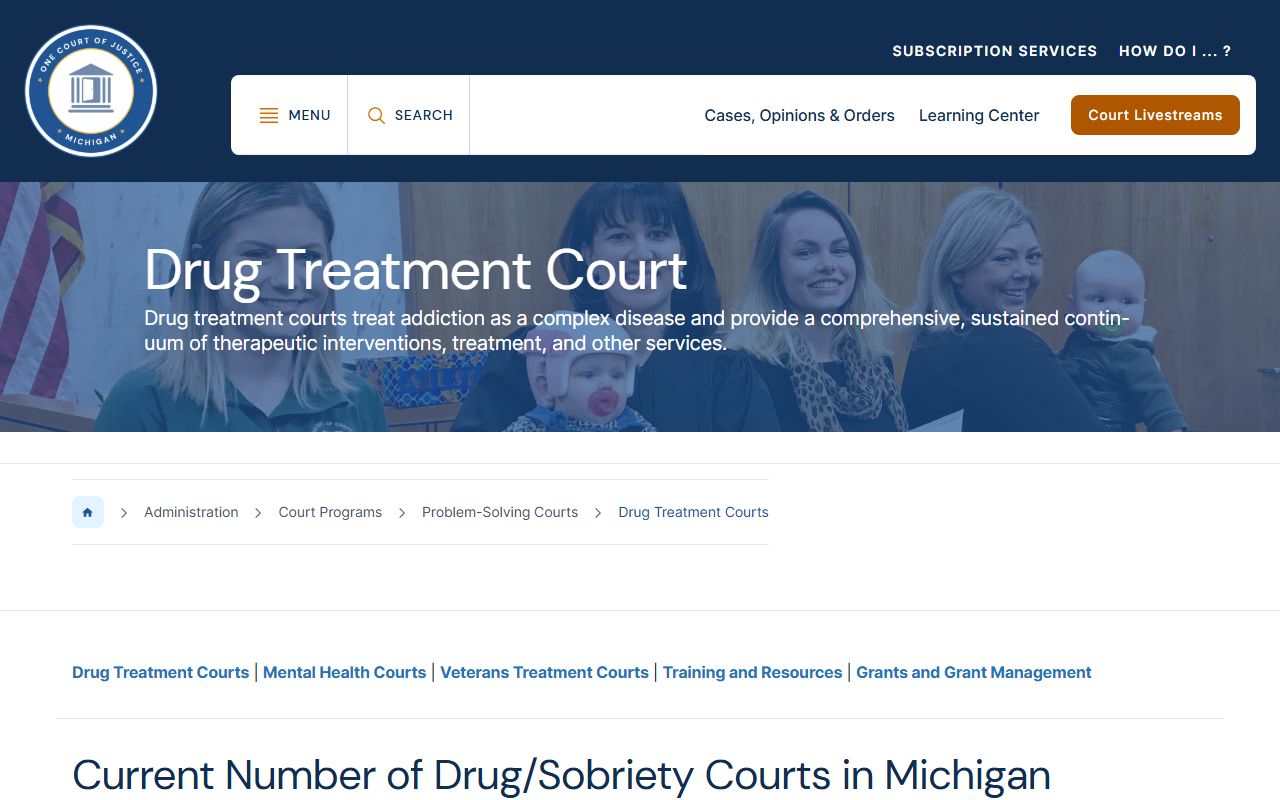
Knowing which category a file falls into tells a searcher whether a record is likely open, restricted, or sealed before any request goes out.
Probate Terms Defined
Probate paperwork uses words that rarely show up in daily life. A short glossary makes Keweenaw County probate records easier to read and helps a first-time filer follow what the court expects. These terms appear on petitions, letters, and orders throughout an estate or guardianship case.
- Testator
- The person who made a will. Their wishes guide how the estate is distributed once the court admits the will.
- Executor
- The person named in a will to carry out its terms, gather assets, pay debts, and distribute what remains.
- Intestate
- Dying without a valid will. State law then decides who inherits and in what shares.
- Personal representative
- The Michigan term for the fiduciary who administers a decedent's estate, whether named in a will or appointed by the court.
- Letters of authority
- The court document that proves a personal representative, guardian, or conservator has legal power to act for the estate or protected person.
- Guardianship
- A court arrangement placing responsibility for a minor or incapacitated adult's care and personal decisions with an appointed guardian.
- Conservatorship
- A court arrangement giving an appointed conservator authority over the money and property of a protected person.
Keweenaw County Probate Court Contacts
Nearly every probate function in the county points to the courthouse in Eagle River. The Probate Court shares the 5095 Fourth Street complex with the Circuit Court, District Court, and County Clerk, but it keeps its own phone line, fax, and email. Because so many offices share one building, name the Probate Court directly when calling about an estate, guardianship, or juvenile file. Office hours are short, so plan a visit or call within the mid-day window.
Keweenaw County Probate Court
5095 Fourth Street
Eagle River, MI 49950
Phone: 906-337-1927
Fax: 906-337-2253
Email: probate@keweenawcountymi.gov
Judge: Hon. Keith W. DeForge
Probate Register & Juvenile Officer: Mary Crampton
Hours: Monday to Friday, 9:00 a.m. to 4:00 p.m.; closed legal holidays
Winter travel is a real factor here. The county advises confirming that the courthouse is open during storms or before a long drive, so a quick call ahead can save a wasted trip.
How to Search Keweenaw County Probate Records
Keweenaw County does not run a full standalone probate database, so most searches use a mix of state tools and direct court contact. The right channel depends on whether a person wants case status, a certified document, or an old genealogy record. Court files are requested from the court itself, not through a public-body FOIA request, because Michigan's FOIA excludes the judiciary. These channels cover most probate lookups:
- Statewide online: the MiCOURT Case Search portal may include probate cases depending on the court and case type; public web fields are limited to case number, party names, and case history.
- In person, phone, or mail: contact the Probate Court at 5095 Fourth Street, Eagle River, or call 906-337-1927 for case files and certified copies.
- Payments: the county website offers a "Pay Probate Office" link for court payments.
- Forms: statewide probate forms come from Michigan Courts and Michigan Legal Help; confirm any local filing or copy fee with the Probate Register.
- Older records: for historical or genealogy probate matters, contact the Archives of Michigan and the Probate Court, since the county's court holdings reach back to the 1860s.
MiCOURT rarely holds complete document images, so a searcher who needs the full file or a certified copy should still go through the Probate Court. For related family filings such as divorce, the Keweenaw County marriage and divorce records page explains the Circuit Court and Clerk channels that sit alongside probate work.
How Probate Works in Keweenaw County
A Keweenaw County probate case moves through a predictable set of stages, whether it opens an estate or appoints a guardian. Because the county leans on one part-time judge, early contact with the Probate Register helps line up scheduling and the correct forms. The steps below outline a typical path from first filing to final closing.
- Identify the matter type: estate, trust, guardianship, conservatorship, mental-health, juvenile or Family Division matter, name change, adoption, or another probate-related petition.
- Contact the Probate Court or Register before filing, since the part-time judge and local handling make scheduling and form selection important.
- File the petition and required forms, then pay the current filing fee set by the court.
- Serve or give notice to interested persons as Michigan probate law requires.
- Attend the hearing if one is set; the judge then issues letters of authority or other orders.
- File inventories, accountings, proofs of service or publication, and closing documents as the case requires.
- Request certified copies from the Probate Court rather than relying on MiCOURT for complete document images.
Each stage generates records the court keeps on file. That paper trail is what a later searcher reviews to understand how an estate or guardianship was handled.
Keweenaw County Probate Filing Fees
Probate filings usually carry a filing fee, and certified copies often cost extra per document or page. A public local probate fee schedule for Keweenaw County was not located in official sources during research, so exact amounts should not be assumed. The most reliable step is to confirm current charges directly with the Probate Register before filing or requesting copies. The table below lists common fee items and points each one back to the court for a current amount.
| Fee item | Amount |
|---|---|
| Estate or petition filing fee | Confirm with the Probate Register |
| Letters of authority | Confirm with the Probate Register |
| Certified copy per document or page | Confirm with the Probate Register |
| Guardianship or conservatorship petition | Confirm with the Probate Register |
Call 906-337-1927 for the current fee list and accepted payment methods before mailing a filing, so a request is not returned for the wrong amount.
What Keweenaw County Probate Records Show
A probate file collects the documents generated across a case, from the opening petition to the final order. Public entries usually identify the case and the people involved, while sensitive details are redacted. The inventory below shows the common fields a Keweenaw County probate record may contain and what each one reveals.
| Field | What it shows |
|---|---|
| Case number and case title | The court's identifier and the estate, decedent, minor, or incapacitated person's name as public data. |
| Filing date and case type | When the matter opened and whether it is an estate, guardianship, conservatorship, or other petition. |
| Petitioner and fiduciary | The person who filed and the appointed personal representative, guardian, or conservator. |
| Attorney information | Counsel of record, if any, for the parties. |
| Letters and orders | Letters of authority, appointment orders, and other rulings the judge issues. |
| Inventory and accounting | Asset inventories, accountings, notices, and proofs of publication or service. |
| Hearings and dispositions | Scheduled hearings and the outcomes recorded on the register of actions. |
| Restrictions and redactions | Protected data for minors, mental-health, adoption, and juvenile matters removed from public view. |
Restricted Keweenaw County Probate Records
Not every probate matter is open to the public. The same court that keeps open estate files also holds some of the most protected records in the county. Mental-health, juvenile, and adoption cases carry strong confidentiality rules, and personal identifiers are stripped from records that otherwise stay public. A searcher should expect these limits and plan around them.
Juvenile matters run through the part-time probate judge, and access is restricted. Michigan's juvenile-record confidentiality statute at MCL 712A.28 governs who may view these files and under what conditions. Adoption records are confidential under the state adoption statute and are not ordinary public case-search records. Mental-health commitment proceedings, which the Probate Court handles for people needing hospital care, are sensitive and largely closed as well. Across all case types, Social Security numbers, financial account numbers, protected addresses, and details about minors or medical conditions may be redacted or sealed.
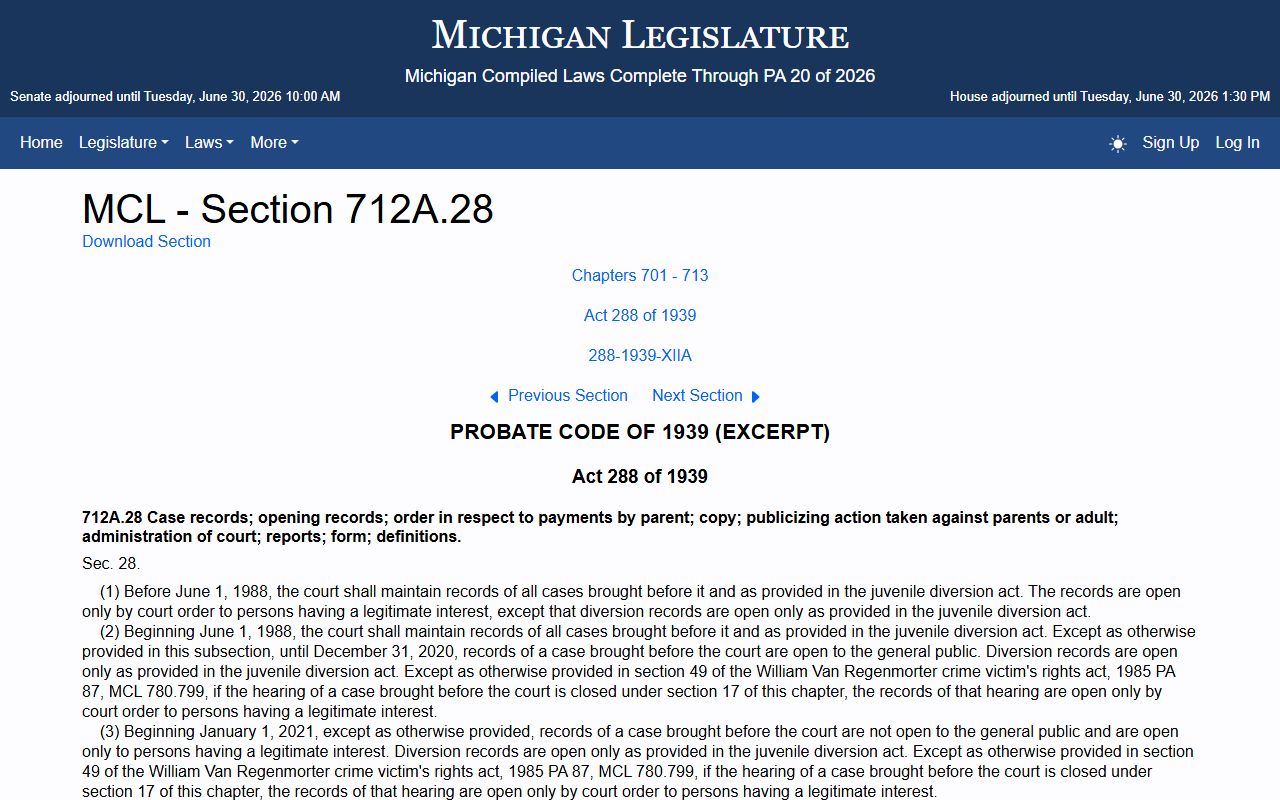
Because the statute controls juvenile access, requests for those files often need a specific legal basis or a court order rather than a routine public search. When a record touches both court and county functions, confirm the correct route first; the County Clerk and Register of Deeds handles vital and land records that sometimes overlap with an estate but follow separate request rules.